Solar And Inverter System
What is an inverter?
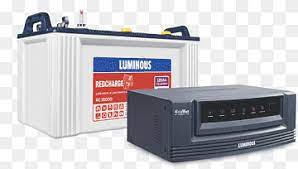
Inverters are electric devices that convert direct currents (DC) to alternating currents (AC). Although household appliances need AC power to operate, AC power cannot be stored. It must be converted to DC power before storing it in a battery.So, inverters are used as backups during power outages and supply AC power to appliances.
WHAT IS SOLAR?
Solar energy is the most abundant, renewable energy source in the world. Solar energy systems refer to technologies that convert the sun’s heat or light to another form of energy for us.
There are three major types of inverters:
Square Wave Inverters: This is the least efficient inverter type of all three. It is used for rudimentary appliances that need little power to start up again.
Modified Sine-Wave Inverters: This inverter takes up several minutes to kick in. It produces power which is adequate for powering basic electronics. It does not provide as smooth a power transition as the pure sine wave inverters.
Pure Sine-Wave Inverter: This uses more sophisticated technology to protect sensitive electronics. It can adjust voltage settings as per the need at any time. It is the best inverter type for homes and shops.
How Do Inverters Work
Inverters do not generate electricity or store it. Its primary function is to convert the AC power from power stations into DC power and store it in the batteries. You may ask why we can’t store electricity in its available AC form?
The simple answer is that while household appliances run on AC power, inverter batteries can only be charged with DC power. Therefore, the inverter must convert the AC power into DC power and store it in a battery.
When there is a power outage, the inverter switches from the main mode to its backup mode, here, the inverter converts the DC power stored in the battery into AC power for different appliances. We should note that the inverter only supplies electricity to the appliances connected to it. Other devices not connected will only work when the main power supply is back on.
There are two categories of technologies that harness solar energy:
Solar Photovoltaics and Solar Thermal.
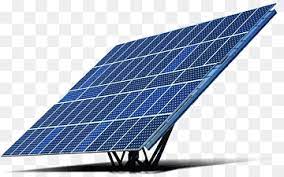
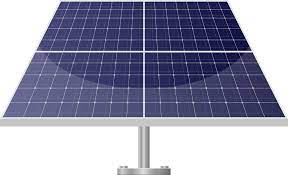
Solar Photovoltaic (or PV) is a technology that converts sunlight into direct current electricity by using semiconductors
Solar Thermal is a technology that utilizes the heat energy from the sun for heating or electricity production
Solar is a renewable resource and does not emit any greenhouse gases in the energy generation process. However, the cost of solar in relation to other fuel sources is a barrier to adoption. Additionally, sunlight varies depending on geographic location, season, and time of day, which all creates limitations on its use.
Understanding the Types of Solar Panels
1.Monocrystalline Silicon:
Also sometimes called Mono-Si or single-crystalline silicon, monocrystalline silicon solar panels are the most common among the three types of solar panels. They’re made by adding a crystalline seed that solidifies the silicon, it’s shaped into bars and then cut into the squares that make up the panel. The resulting material is high quality, with consistent crystalline structures that enhance the panels’ efficiency. The panels typically have cells with the corners cut off, giving them a characteristic look.
Advantages of these panels include:
High solar panel efficiency ratings ranging from 15 to 20 percent or better, as noted by Energy Informative.
Space efficiency requiring the least amount of space compared to other types of solar panels.
They’re the most durable and typically come with a 25-year warranty.
2.Polycrystalline Silicon:
Often called p-Si or multi-crystalline silicon, polycrystalline silicon solar panels are made by melting raw silicon. That gets poured into a mold that’s cooled before cutting it into perfect squares, giving these solar panels a different look than their Mono-Si counterparts. Because the process is simpler, these solar panels are also less expensive. The solar panel efficiency ranges from 13 to 16 percent on average. Additionally, they do take up more space.
3.Thin-Film Solar:
Thin-film solar panels are manufactured differently than other types of solar panels. They’re made by layering photovoltaic materials like cadmium telluride, organic photovoltaic cells, amorphous silicon or copper indium. Depending on the type of material used, the efficiency of this type of panel runs up to around 13 percent or so, according to Energy Informative. Because they’re easy to make, they’re typically less expensive. Additionally, they have a uniform appearance that many homeowners find appealing. They do take up a lot of space, so they’re not always a good fit.
4.Multijunction Solar:
The latest solar panel technology, multijunction solar, offers efficiency of around 40 percent according to Vivint Solar. This type of solar panels are created a little differently, with layers of semiconductors, each able to convert light into energy differently to waste less of the light and provide more power. Although they’re very efficient, they’re also cost-prohibitive. These solar panels are typically only used in research labs and satellites.
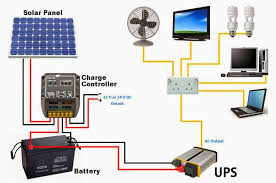
Solar works by taking the variable direct current from the solar panels and changing it into alternating 120V/240V or alternate current output. Most home appliances run on alternate current but not direct current. It is the reason why solar panels must change the direct current output collected by your solar panels.
Inverter Vs Converter
Inverters convert voltage from DC to AC. Solar panels generate DC, whereas households primarily consume AC. Thus, inverters convert solar energy into a form that is usable in your customer’s homes.
Sometimes, inverters are mistakenly referred to as converters or power converters. It’s helpful to be aware of this in case it happens.
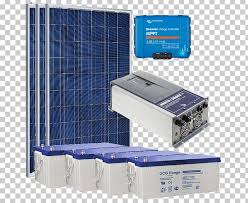
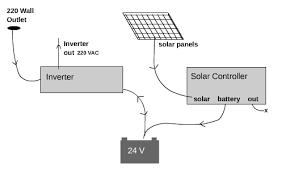
In solar applications, a charge controller, which is a DC-to-DC converter, is used to regulate the power running through the system and maximize output. The charge controller helps the battery bank and inverter to receive a more consistent current.
Solar systems need inverters to convert the voltage from DC to AC. By contrast, charge controllers are only needed on solar systems with batteries, in both grid-tied and off-grid applications.
We carry out electrical installation, Troubleshootings, Repair and Maintenance. We have the technical competency and integrity to efficiently design, undertake and deliver electrical installation of any kind and magintude.Call on us for your electrical solution at ESAR-Engineering Global.